The dry camping habits from the Fleetwood manual, the one load that ends a quiet night, and the battery and solar we'd pair for two or three nights out.
The first night without hookups often ends the same way. The lights dim around midnight, the fridge starts beeping, and somebody walks outside to start the generator. Most of that is habits, not hardware.
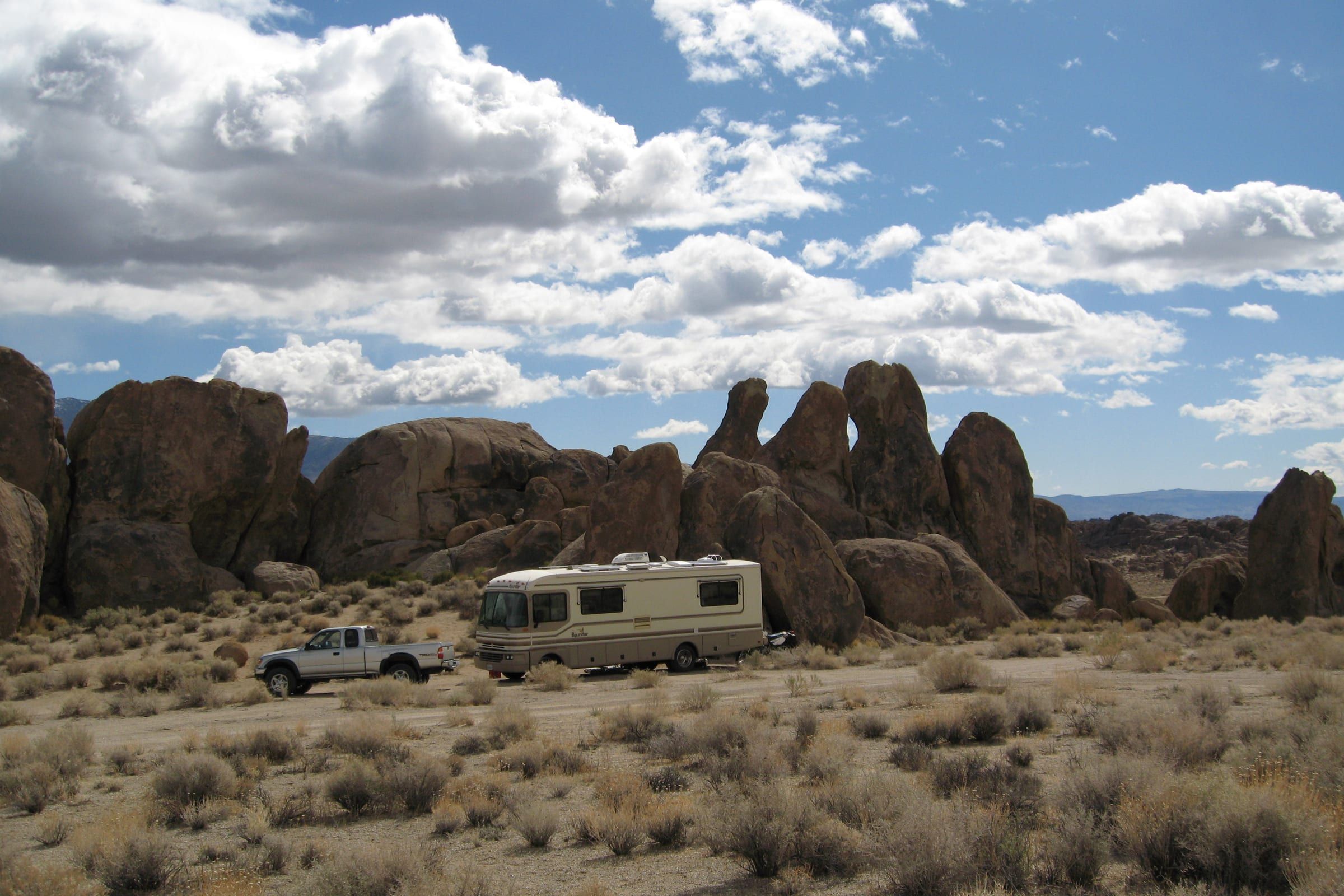
Boondocking (also called dry camping) means no shore power, no water hookup, and no sewer. Here’s how to stretch what you bring, and what to buy when habits aren’t enough.
Arrive full, leave empty
The 2019 Fleetwood Bounder manual keeps its dry camping advice short. Show up with charged batteries, a full fresh water tank, a full water heater, and empty waste tanks.
It sounds obvious. It’s also the cheapest power upgrade there is. Your alternator charges the house batteries while you drive, so top them off on the way in, not after you’ve parked.
Habits that stretch a day
These come straight from that Fleetwood manual:
Run an absorption fridge on propane, and open the door less.
Heat water about 20 minutes before you need it, then turn the water heater off.
Drop the thermostat a little so the furnace cycles less.
Open windows and run the vent fans before you reach for the roof air.
The air conditioner problem
Air conditioning is the load that ends a quiet camp. In the Megawatt calculator, checking that box adds 3,500 Wh a day on a compact rig and 11,000 Wh on a luxury coach.
No roof holds enough panels to cover that. If the trip needs air conditioning, it needs a generator or a hookup. The generator versus solar calculator shows what a year of each costs with your own fuel price.
What we’d buy
Battery
Our pick
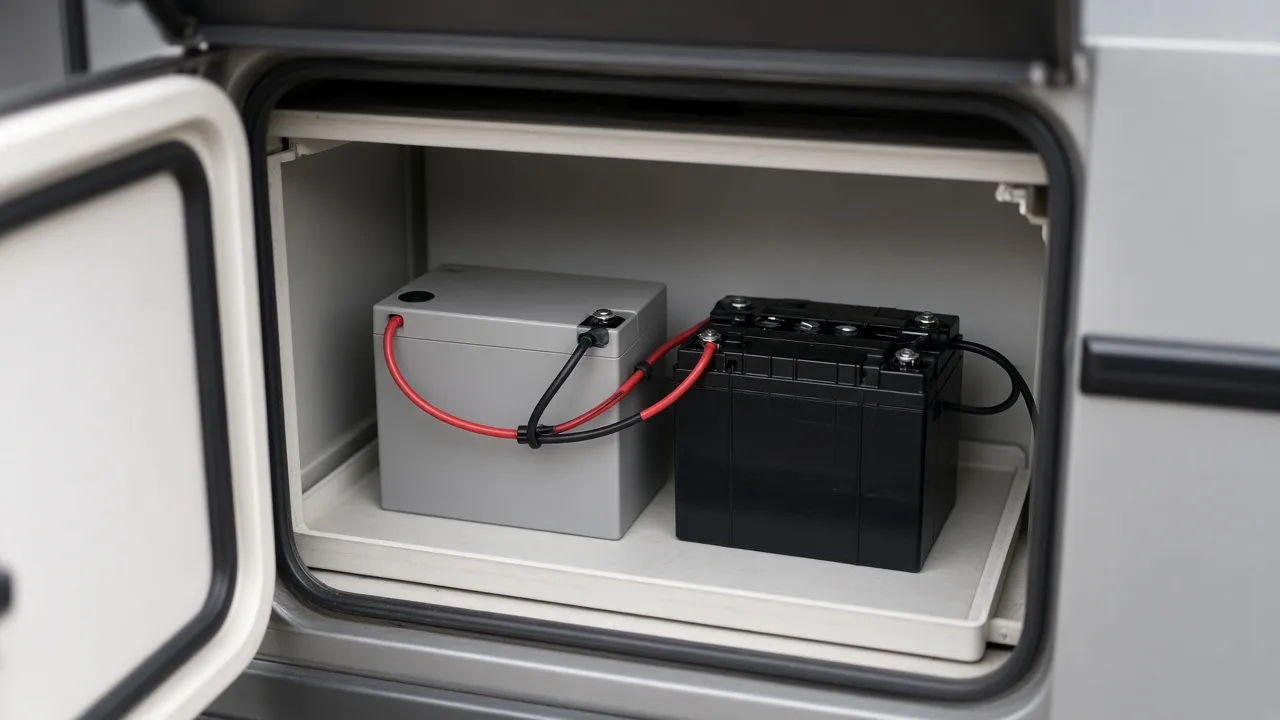
Vatrer 12V 300Ah
A full night of a mid-size coach's default load, with room for a gray morning.
3,840 WhStored at 12.8 V nominal
Why we like it
The mid-size day is 2,400 Wh. The calculator keeps a day and a half of that (3,600 Wh) in the bank, and this 3,840 Wh pack covers it.
Who it’s for
Two people in a Class C or mid-size Class A who dry camp two or three nights at a time and have solar to refill the bank.
Flaws but not dealbreakers
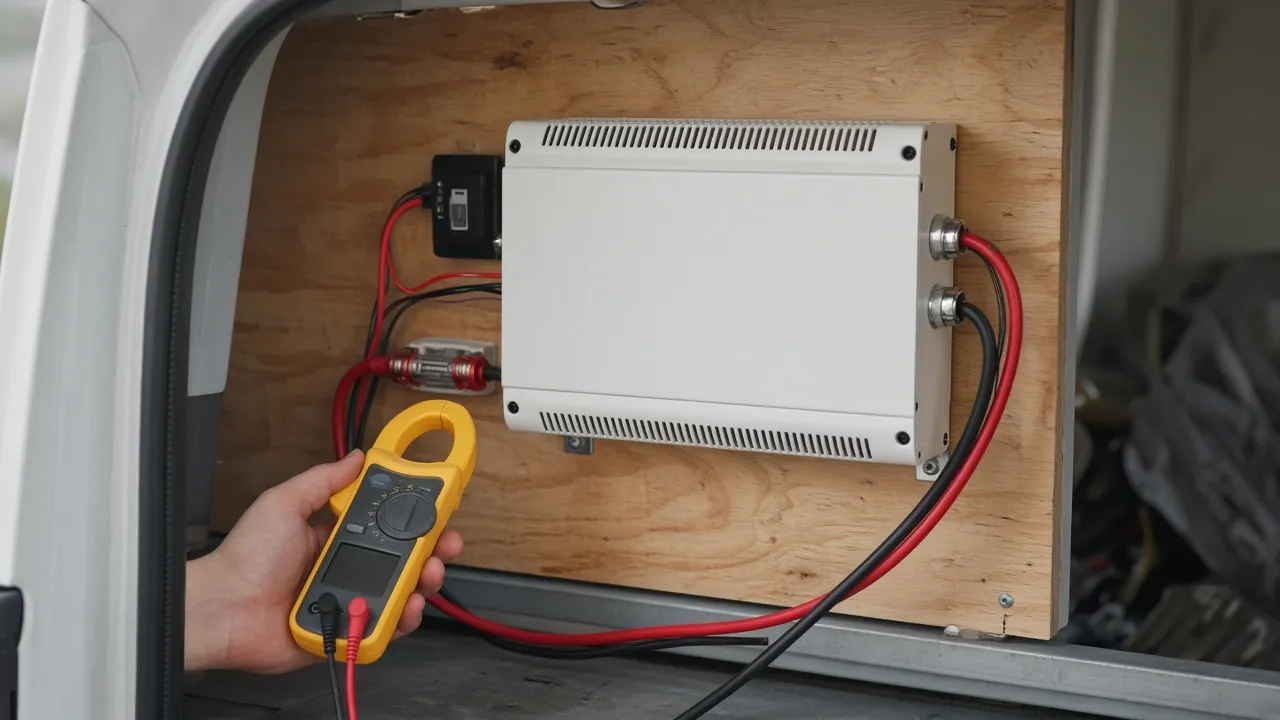
It's heavy, so check the weight against your battery tray. Your converter needs a lithium charge setting to fill it completely.
Solar
Our pick
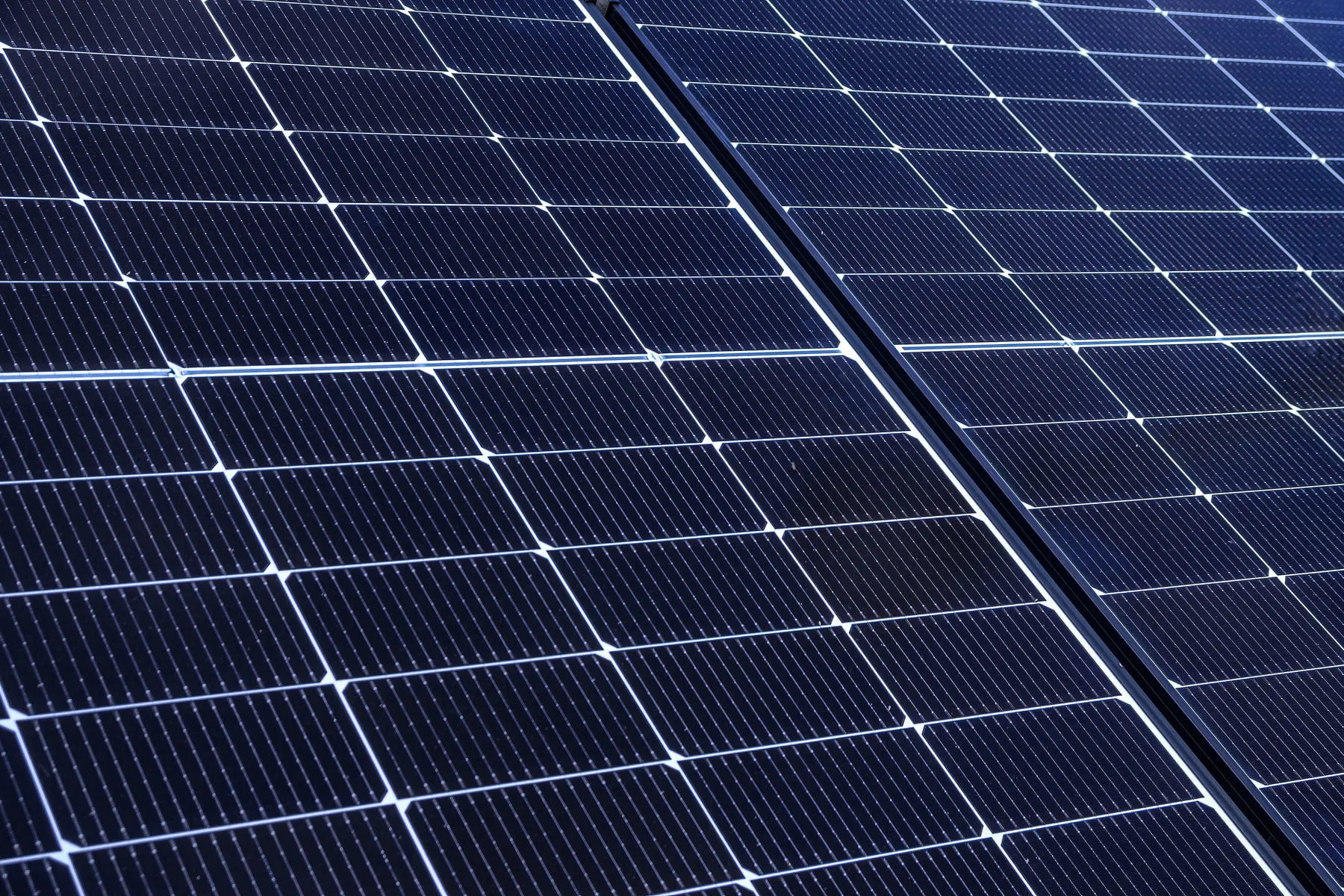
400 W solar kit
Puts back most of a compact day, or half a mid-size one.
400 WPanel rating
Why we like it
At 4 sun hours, 400 W makes about 1,200 Wh after losses. On a compact rig that's most of the 1,450 Wh default day. On a mid-size coach it turns one night of battery into two or three.
Who it’s for
Weekend boondockers who park in the open, and anyone who wants the generator to be the backup instead of the plan.
Flaws but not dealbreakers
Panels make nothing at night and very little under trees. Park for sun when you can, and check the solar forecast before you go.
Watch the weather
Wind matters more when you’re parked alone on open ground. Check the max wind calculator before a gusty night, and keep a weather radio in the coach for when the phone has no bars.
Midland emergency weather radio
A weather radio picks up broadcast alerts without a cell signal. Check the listing for its power options (batteries, hand crank, or solar) and test it at home first.
How much of the label you can actually use, what the Megawatt calculator picks for compact, mid-size, and luxury rigs, and where AGM still makes sense.