Lithium or AGM: which battery belongs in your coach
How much of the label you can actually use, what the Megawatt calculator picks for compact, mid-size, and luxury rigs, and where AGM still makes sense.
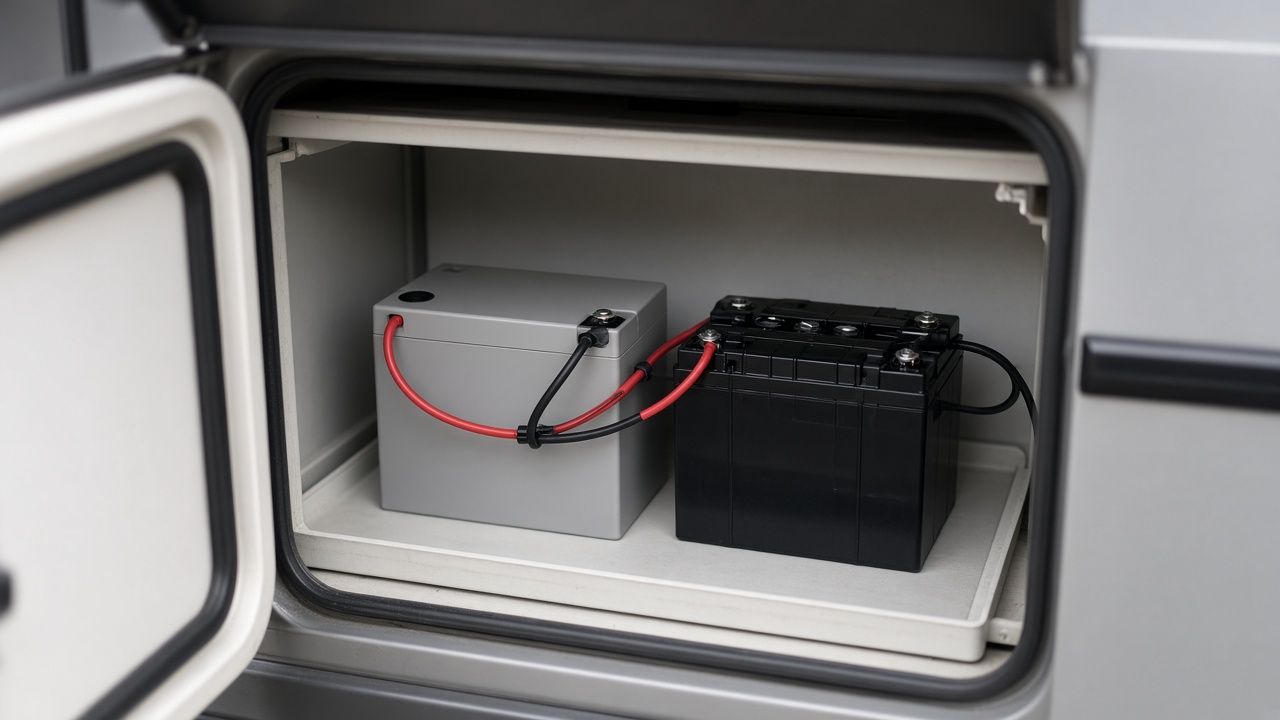
Your coach probably came with lead-acid batteries, and your first weekend without hookups probably told you they weren’t enough. The real question isn’t lithium or AGM. It’s how many usable watt-hours you need, and what you’ll pay for each one.
Every battery Megawatt links is a Vatrer lithium iron phosphate pack (LiFePO4, the battery chemistry most RV lithium uses). So that’s what the picks cover. We’ll still tell you where AGM makes sense.
Our picks
Our pick
Vatrer 12V 300Ah
The battery the calculator lands on for most coaches.
3,840 WhStored at 12.8 V nominal
Why we like it
Run the Megawatt battery calculator with the compact or mid-size defaults and one night off grid, and it picks this battery both times. It stores 3,840 Wh (12.8 V times 300 Ah) and keeps you on a 12 V system, so your existing wiring and fuse panel still make sense.
Who it’s for
Class C, mid-size Class A, and fifth wheel owners replacing a pair of lead-acid batteries who want a real night of power without starting the generator.
Flaws but not dealbreakers
It's one big, heavy box, so measure the battery bay and check the weight on the listing before you order. Your converter also needs a lithium charge setting, or the battery may never charge all the way.
Budget pick
Vatrer 12V 100Ah
The calculator's smallest pick, for light 12 V loads.
1,280 WhStored at 12.8 V nominal
Why we like it
At 1,280 Wh, it's the floor the calculator never goes below. That's enough for lights, fans, and the water pump (300 to 500 Wh a day in the presets) for a couple of nights.
Who it’s for
Weekend campers with a propane or two-way fridge who mostly need lights and a working water pump.
Flaws but not dealbreakers
It won't carry a residential fridge overnight. When we last checked, Megawatt's link for this size didn't open a product page. If you land on a search page instead, the 300 Ah pick is the safer bet.
Upgrade pick
Vatrer 12V 560Ah
Sized for a luxury Class A with a residential fridge.
7,168 WhStored at 12.8 V nominal
Why we like it
The luxury default (heavy LED lighting, a residential fridge, and the full TV and kitchen outlet package) uses 4,200 Wh a day. The calculator wants 6,300 Wh in the bank for one night, and this 7,168 Wh pack is the first 12 V size that clears it.
Who it’s for
Diesel pushers and big gas Class A coaches that run a residential fridge on the inverter overnight.
Flaws but not dealbreakers
It's a big purchase and a big battery. Plan it with your inverter: the calculator moves you to 24 V once more than 3,000 W runs at the same time.
What “usable” means
A battery’s label tells you its capacity. What you can actually use is smaller, and that gap is the whole lithium versus AGM argument.
AGM is a sealed lead-acid battery. A common rule of thumb is to use only about half of its rated capacity, because draining lead-acid deep, over and over, wears it out early. Lithium handles much deeper discharges, so more of the label is yours.
That’s why lithium can cost more up front and still be the cheaper way to buy usable watt-hours. Depth of discharge and cycle life vary by model, so read the spec sheet for the exact battery before you compare.
When AGM still makes sense
AGM costs less at the counter, fits trays built for lead-acid, and works with the lead-acid charge setting most stock converters already have. If the coach lives on hookups and the batteries only bridge the gap between pedestals, AGM is fine.
Megawatt doesn’t link an AGM battery right now, so there’s no AGM pick here. Use the battery runtime calculator to compare: enter the usable fraction you plan to live with, and it shows you the hours.
Try the math
Try the math
Which battery does the calculator pick?
Pick a coach, then set how many nights you'll be off the grid.
Formula: keep at least a day and a half of your load in the bank, subtract what the panels make on a 4-hour sun day after 25% losses, and never go below 1,280 Wh. Voltage steps to 24 V above 3,000 W of peak load and 48 V above 5,000 W.
Every size Megawatt links
The calculator only steps up to these when your load or your peak watts call for it.
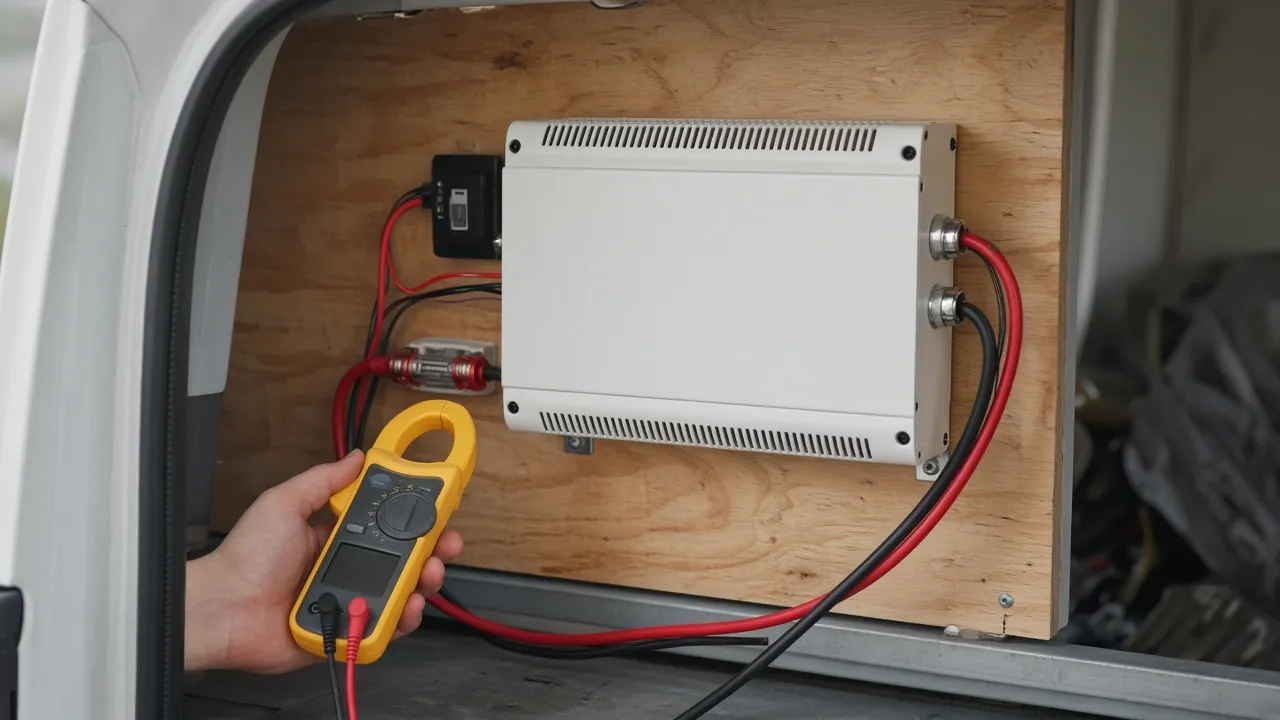
Check two things before you order: your converter’s charge settings, and the battery maker’s charging voltages. A lithium bank charged on a lead-acid setting may never reach full.
Fleetwood’s own manual cautions owners about the wrong voltage too, and about electrical changes and the warranty. If you’re moving to 24 or 48 V, that’s a new inverter and charger, and a job for an installer.
Spot something wrong or out of date? Tell us and we'll fix it.
The dry camping habits from the Fleetwood manual, the one load that ends a quiet night, and the battery and solar we'd pair for two or three nights out.