Vatrer 12V 300Ah
3,840 Wh. The calculator's pick for compact and mid-size coaches.
Check price on Amazon
Price is on Amazon, not stored here.
Maintenance
The two battery banks, the cutoff switch, the storage rules most owners skip, and how lithium care differs from lead-acid.
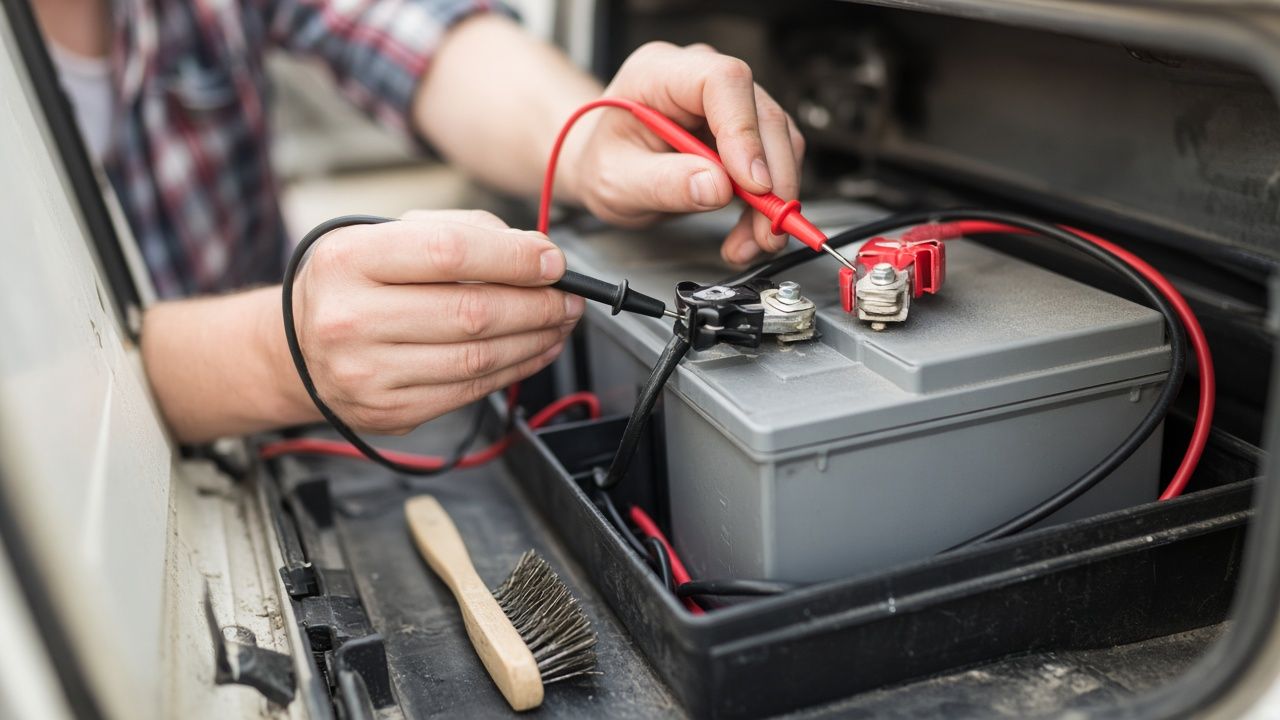
A dead house battery in April is usually a storage problem from November. A handful of habits prevents it. The 2019 Fleetwood Bounder manual spells them out, and most owners never read that far.
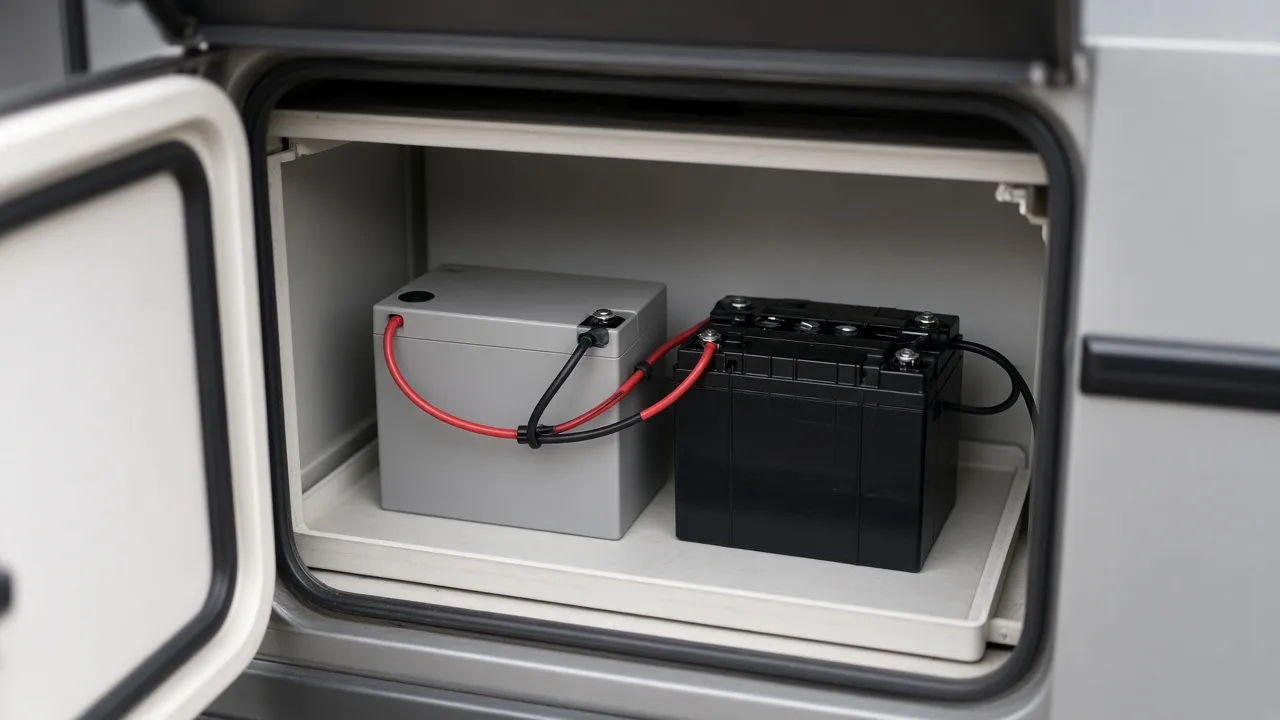
Your coach has two sets of batteries. The chassis batteries start the engine. The house batteries run the lights and most of the 12 V appliances.
They charge each other in specific cases. While you drive, the alternator charges the house bank, and shore power or the generator charges the chassis bank. If one bank keeps dying, that’s the first relationship to check.
The battery cutoff on the monitor panel (the manual also calls it Aux) disconnects the house 12 V loads. Turn the interior lights off before you flip it.
If the coach goes dark and you don’t know why, start there. The problem fixer walks the cutoff, then the fuse panel, before it ever suggests buying anything.
The storage chapter is specific:
The manual doesn’t give a target voltage in those paragraphs, so use the number on your battery’s spec sheet. The storage checklist keeps the rest of the list, and it remembers what you’ve checked on this device.
Flooded lead-acid batteries need distilled water, clean terminals, and a load test now and then. Fleetwood points you to the battery maker’s manual in your owner’s information file for those steps. Follow it.
Lithium batteries are sealed. Don’t try to add water, and don’t run an equalize cycle on them (a deliberate overcharge some chargers use to balance lead-acid cells). Don’t assume the stock converter’s voltages suit them, either. Read the battery maker’s charging sheet.
The smallest battery the calculator will pick is 1,280 Wh, and most coaches land on the 300 Ah pack. Size yours from your own appliances in the battery bank calculator.
3,840 Wh. The calculator's pick for compact and mid-size coaches.
Price is on Amazon, not stored here.
1,280 Wh. The smallest size, for light 12 V loads.
Price is on Amazon, not stored here. In our October 2026 check this link didn't open a product page, so confirm the listing before you buy.
Spot something wrong or out of date? Tell us and we'll fix it.
Keep reading

Solar
Size the kit from what your coach uses in a day, then measure the roof. Our picks for compact, mid-size, and luxury rigs.
Batteries
How much of the label you can actually use, what the Megawatt calculator picks for compact, mid-size, and luxury rigs, and where AGM still makes sense.
Power
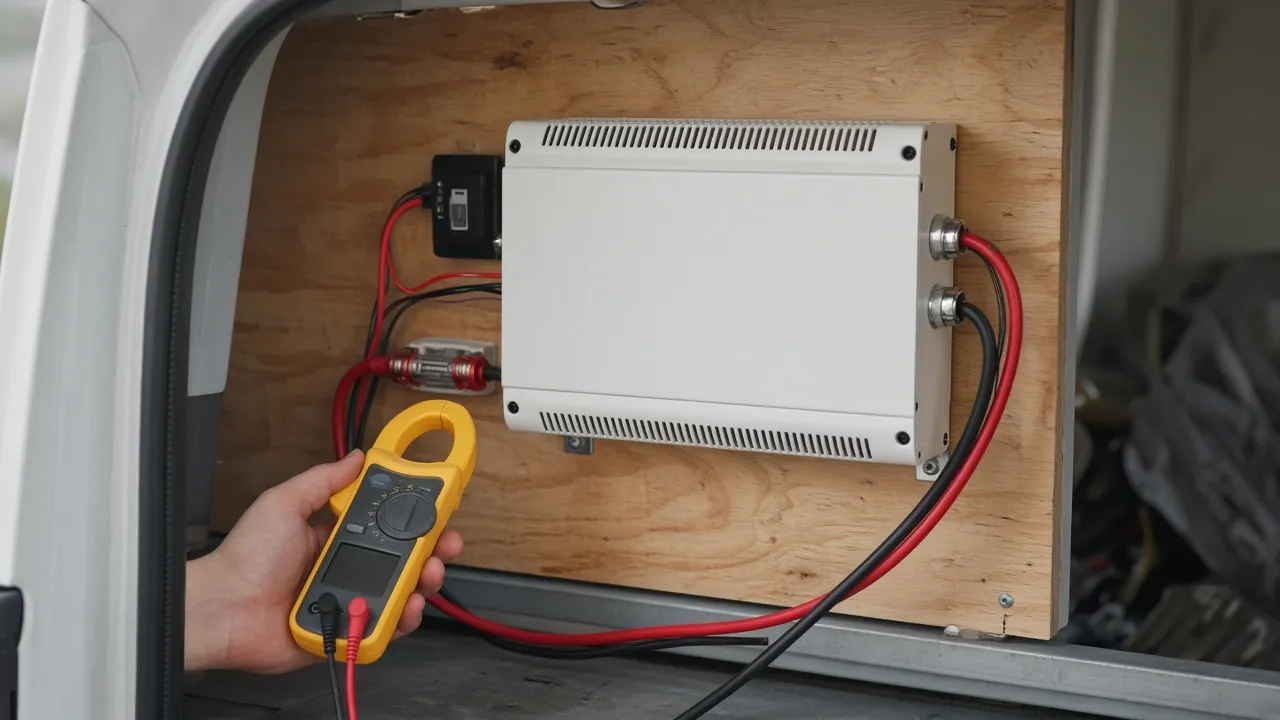
Add up the watts that run at the same time, add a margin, and match the battery voltage. Worked numbers for compact, mid-size, and luxury coaches.